
Payment recovery for creators: how smart dunning boosts ARR
Payment recovery for creators is the highest-ROI retention lever most subscription brands ignore. Implementing a deliberate dunning strategy that combines smart retries, card-updater integrations, and targeted winbacks can recover 50–80% of failed charges and add 2–6% incremental ARR.
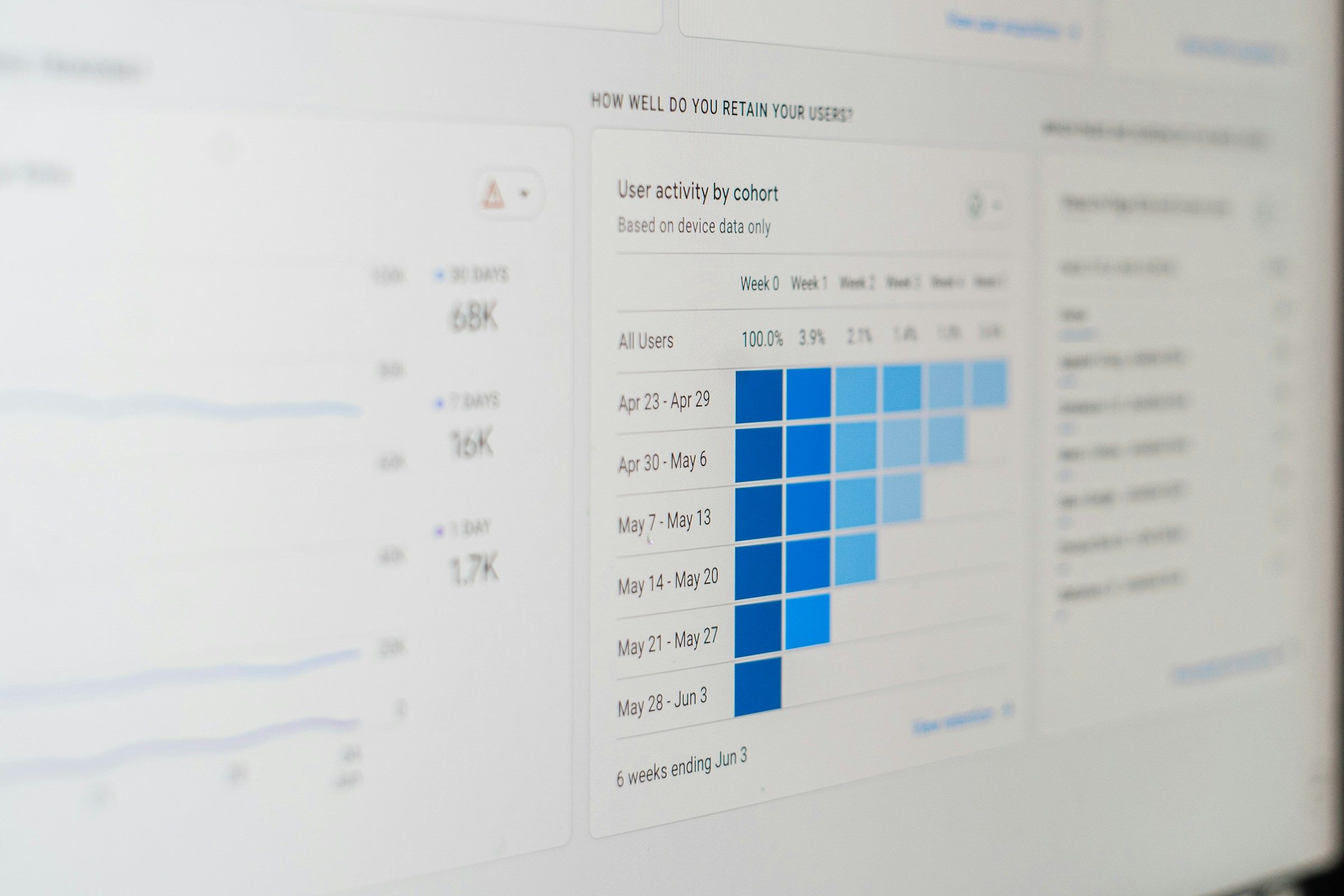
Payment recovery for creators is the highest-ROI retention lever most subscription brands ignore. If you treat failed charges as a product problem rather than an accounting nuisance you can materially change unit economics without raising price or lowering churn across voluntary cancellations.
A typical creator subscription business with 1,000 paying subscribers at $19.99/month generates $19,990/month and $239,880/year in gross subscription revenue. Industry-standard involuntary failure rates run between 2% and 5% of billings annually; that equates to $4,798–$11,994 of pure leakage on that base. Recovering even 60% of those failed payments adds $2,879–$7,196 to your top line—no new content required.
Direct answer: Implementing a dunning program with a structured retry cadence, card updater integration, multi-channel notifications, and a branded recovery page typically recovers 50–80% of failed charges and produces a 2–6% lift to ARR. For example, a creator with 1,000 subs at $19.99/month and a 4% failure rate loses $9,595 annually; recovering 70% returns $6,717, roughly 2.8% of ARR.
Payment recovery for creators: the economics
Start with the simple math. 1,000 subscribers paying $19.99/month equals $19,990 of monthly recurring revenue and $239,880 of ARR. A 4% failed-charge rate against that ARR is $9,595 in gross lost revenue. Recovering 70% of those failed charges returns $6,717—an immediate 2.8% ARR increase.
Involuntary churn compounds. If 30% of your monthly churn is involuntary (card declines, expired cards, etc.), then a brand with 14% total monthly churn is carrying ~4.2% monthly involuntary churn. For a $240k ARR creator, that’s the difference between flat growth and tens of thousands of dollars a year in margin erosion.
Vendor economics matter. Payments platforms like Stripe Billing and Adyen offer built-in dunning features and card-update network integrations. Specialized recovery providers commonly charge $250–$1,200/month or 5–12% of recovered revenue. Compare that to the effective ROI: recovering $6,700 at a 10% success-fee costs $670, so your net incremental ARR remains >$6,000.
Chargebacks and disputes are the counterweight. Industry guidance keeps chargeback rates below 0.5% to avoid elevated processing costs. Over-aggressive retry logic or repeated hard-decline retries can increase disputes. A disciplined program targets soft declines first and caps retries for hard declines—this keeps dispute rates low while maximizing recoveries.
Card updater networks (Visa, Mastercard, American Express) have measurable impact. Public case studies show account-updater programs reduce card-expiry failures by 20–40% and can lower involuntary churn by similar magnitudes. Pairing card-updater with smart retries compounds the effect.
Treat failed charges as product features: a 70% recovery rate on a 4% failure bucket can add ~2.8% ARR with a fractional operations cost.
How to build a dunning program that actually works
Design your retry cadence around failure type. Soft declines (insufficient funds, temporary holds) respond well to 2–4 retries over 3–7 days with increasing intervals; hard declines (stolen card, closed account) should trigger immediate customer messaging and an exit path rather than repeated retries.
Use the payment network's updater plus a product-level retry engine. Stripe's Card Account Updater and similar services surface new card details without customer action; that alone can reduce expiry-related failures by 20–40%. Implement a retry engine that catches account-updates before the next invoice attempt.
Invest in multi-channel recovery flows. Email alone recovers roughly 30–50% of soft declines; adding SMS typically pushes that to 50–70%. In-app notices for logged-in users, plus push notifications if you have a mobile client, increase conversion on recovery pages.
Design a branded recovery landing page. A one-click retry flow with stored payment instruments and a clear explanation converts at 2–4x the rate of a plain payment portal. Customize copy by segment—heavy spenders get a quick manual checkout path and support escalation; low-ARPU subs see a simplified retry link or a short-term coupon.
Use targeted winbacks. For subscribers you can’t recover immediately, deploy a timed winback: a 25–50% off one-month coupon sent at 7–14 days post-failure typically converts at 5–12% depending on ARPU and audience willingness to re-subscribe.
Balance automation and human touch. Route top-tier accounts (by LTV or recent spend) to a manual recovery team that can process payments over the phone or via secure invoice links. Manual retrieval for 1–3% of customers often recovers 30–50% of otherwise-churned revenue among that cohort.
What this means for a creator-founder
You don't need more followers to materially improve margins; you need better payments engineering. If you run your platform on Stripe Billing, enable Card Account Updater, configure smart retries, and add an SMS channel—these three moves alone are often the lowest-friction, highest-ROI changes you can make this quarter.
If you tenant on a third-party platform (OnlyFans, Patreon, Fanvue), push for better vendor-level dunning or migrate higher-ARPU segments to your owned billing where you control retries and recovery UX. The difference in recovered revenue scales with audience size; a 10k-fan creator with 1k paid subs can convert recovered revenue into meaningful reinvestment capital for content or paid ads.
Measure everything. Track failed charge rate, recovery rate, cost-per-recovery, and chargeback rate by cohort. A creator with 1,000 subs and $19.99 ARPU can expect to iterate through 2–4 dunning experiments and see recovery lift within 30–60 days if they measure cohorted outcomes.
Quick checklist: 6 steps to deploy a dunning program
1. Enable card updater network with your processor (Stripe, Adyen) and confirm account syncs monthly. 2. Implement a retry cadence: 1 initial retry, then retries at 48 hrs and 7 days for soft declines, stop after 5 attempts for hard declines. 3. Add SMS alongside email and in-app notices; prioritize SMS for high-ARPU cohorts. 4. Build a branded recovery landing page with one-click retry and saved instruments. 5. Segment manual recovery for top 5–10% LTV accounts and route to support. 6. Run a 7–14 day winback with a targeted coupon for unrecovered accounts.
Key takeaways for creator-founders
1. Recovering failed payments is a product and growth lever that typically yields a 2–6% ARR uplift for established subscription creators. 2. A combined approach—card updater + smart retries + SMS + branded recovery page—recovers 50–80% of soft failures at modest cost. 3. Measure recovery rate, cost-per-recovery, and chargeback impact by cohort and prioritize manual recovery for high-LTV subscribers.
Closing: Payment recovery for creators is not an operations footnote—you should treat it like a feature on your product roadmap. When you stop accepting failed charges as unavoidable leakage and start designing a recovery funnel that respects the customer experience, you convert passive revenue loss into predictable ARR growth without creating new content or asking your fans to pay more.
Frequently asked questions
How much can smart dunning increase my ARR?
Smart dunning typically produces a 2–6% lift to ARR when implemented with structured retries, card-updater integration, multi-channel notifications, and a branded recovery page. For example, a creator with 1,000 subs at $19.99/month and a 4% failure rate loses $9,595 annually; recovering 70% returns $6,717, an immediate ~2.8% ARR increase.
What retry cadence should I use for failed charges?
Use a differentiated retry cadence: 2–4 retries over 3–7 days with increasing intervals for soft declines (insufficient funds, temporary holds); treat hard declines (stolen card, closed account) as immediate messaging cases and stop repeated retries. Integrate a retry engine with your card-updater so refreshed cards are attempted before the next invoice, improving recovery rates while limiting disputes.
Should I enable a card updater network for creator payments?
Yes—enable card updater networks (Visa, Mastercard, American Express): public case studies show they reduce card-expiry failures by 20–40% and lower involuntary churn similarly. Pairing updater services with smart retries and multi-channel recovery flows compounds impact, reducing failures without customer friction and improving recovery rates.
How do I balance recovery attempts without increasing chargebacks?
Limit chargebacks by targeting soft declines, capping retries on hard declines, and avoiding aggressive retry loops; industry guidance keeps chargeback rates below 0.5%. Route high-LTV accounts to manual recovery, monitor dispute rates, and use measured automation so recovery lifts aren't offset by elevated processing costs or increased disputes.